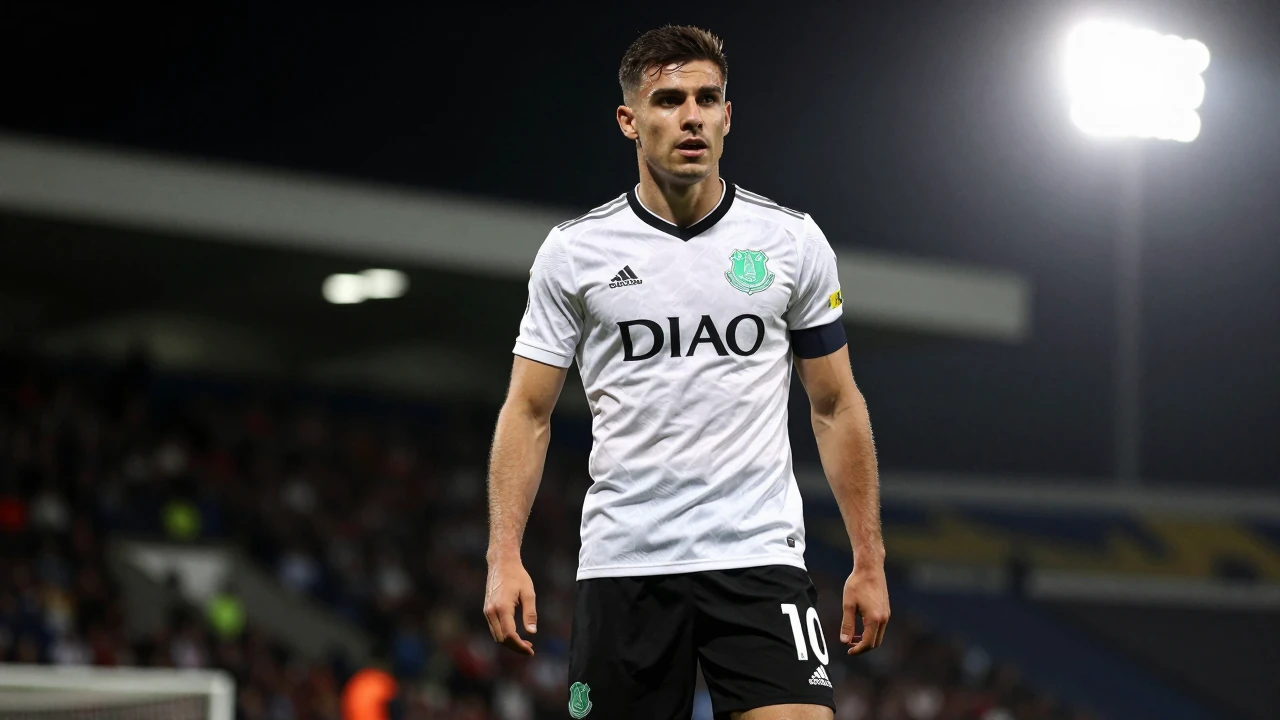

Everton's back-post threat was decisive in their 2-0 Premier League opening win against Crystal Palace. Thierno Barry headed home the second goal in the 53rd minute, securing three points that place Everton fourth in the table with a perfect record from one game.
Manager David Moyes highlighted the plan after the match. "We are trying to get more balls in the box. We are trying to get Thierno in the right positions as often as we can." Moyes said. The goal originated from a quick free-kick by new signing Hayden Hackney, who found Iliman Ndiaye on the wing. Ndiaye's cross was met by Barry, who had cleverly positioned himself in front of defender Chris Richards. The header took a slight deflection on its way in, making Barry the club's top scorer this season with one goal in one appearance.
The goal against Palace was a textbook example of a pattern Everton have refined. It relies on precise crossing and intelligent movement from attackers like Barry and Beto. Against Brighton & Hove Albion in a 2-0 win last August, a similar move saw Barry's run free Ndiaye to score at the back post. The system also involves midfielders making supporting runs. Kiernan Dewsbury-Hall, who joined from Chelsea last summer, frequently makes underlapping runs in the left half-space to create overloads. This was evident in a 3-2 win over Wolverhampton Wanderers, where Dewsbury-Hall assisted a Ndiaye back-post goal after receiving a pass from Jack Grealish.
Since the start of the 2025-26 season, Everton have scored seven Premier League goals from back-post situations. While Chelsea (13) and Manchester United (8) have more, the underlying numbers show Everton's consistent threat. The team has accumulated the second-highest expected goals (xG) from back-post chances in the league during that period, with a total of 8.8 xG. This statistical strength confirms the tactic is a reliable source of goals, not only a sporadic success. You can explore more team statistics on our stats page.
The strategy use the specific strengths of several key figures. Striker Beto provides a physical presence, while Thierno Barry offers clever movement. Winger Iliman Ndiaye is a consistent crosser, and midfielder Kiernan Dewsbury-Hall times his runs to support the attack. The summer arrival of Brennan Johnson, described as the ultimate back-post attacker, in a swap deal with Dwight McNeil adds another dimension. Johnson's profile suggests Everton are doubling down on this approach. The departure of McNeil to Crystal Palace and the arrival of Hackney from Middlesbrough show a squad evolution tailored to this style.
With two goals scored and none conceded, Everton's positive goal difference is an early boost. The immediate focus shifts to maintaining momentum in their next fixture, an away match against Bournemouth on 29 August. Bournemouth currently sit 14th, making it a game where Everton's set attacking plan could again prove the difference. The club's early season targets will likely depend on this back-post threat remaining a potent weapon. Fans can track the team's progress in the standings and view the full squad shaping this approach.