 Everton Hub
Reassessing Everton's Tactical Framework: A Path Forward in Recent Form
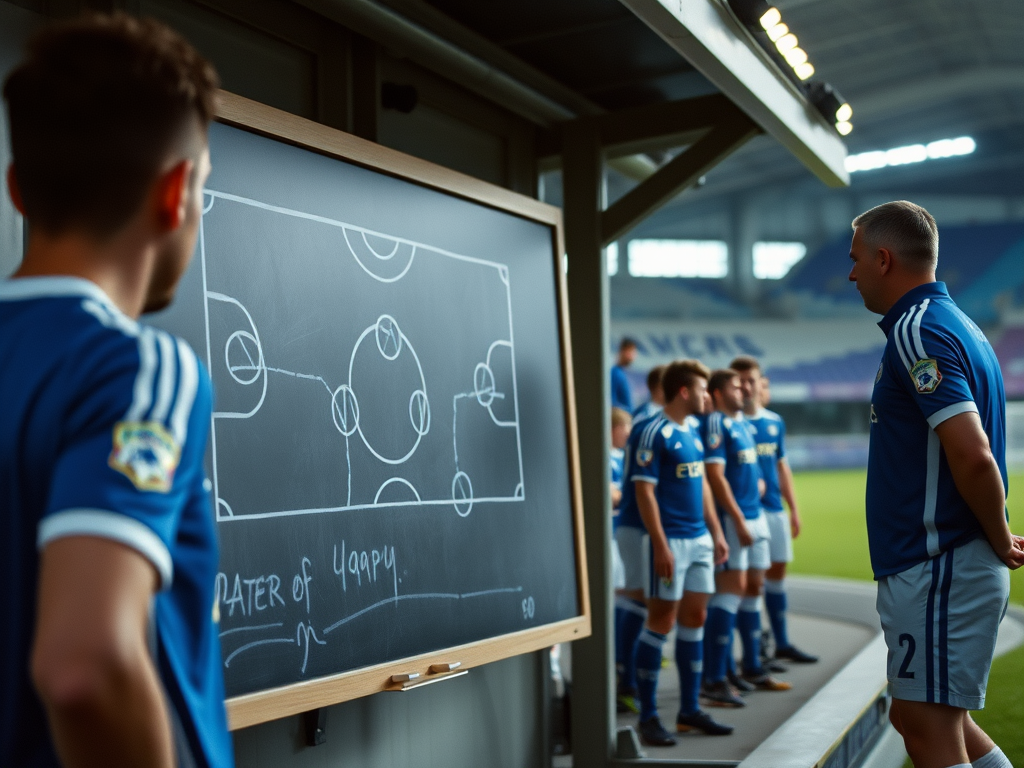
As Everton navigates a challenging phase in the league, their recent performances have sparked discussions about tactical adjustments that could enhance their competitiveness. While the Toffees have shown flashes of promise, inconsistencies in both defensive organization and attacking fluidity have hindered their progress. To regain momentum, it is crucial for manager David Moyes to implement a few strategic tweaks that could revive team spirit and effectiveness.
Defensive Solidity: The Foundation of Resilience
The core of any successful team lies in its defensive structure, and for Everton, tightening the backline should be the first order of business. Currently, the Toffees have been exposed to counter-attacks, often allowing opponents to exploit spaces left vulnerable by aggressive pressing. A shift from a high defensive line to a slightly deeper setup could not only mitigate these risks but also allow the midfield to regain shape when possession is lost.
Additionally, incorporating a more zonal marking system could help in managing aerial threats more effectively, particularly from set pieces. With players like James Tarkowski and Yerry Mina in the squad, Everton possesses aerial prowess that can be capitalized upon defensively. The focus should be on maintaining a compact shape, ensuring that players are aware of their responsibilities and can quickly transition into a defensive posture when required.
Midfield Dynamics: Engine Room Revitalization
In midfield, Everton has often struggled to dominate possession and control the tempo of games. One tactical tweak could involve transitioning to a more dynamic midfield trio, allowing for increased fluidity and interchangeability among players like Amadou Onana, Idrissa Gueye, and Dele Alli. By encouraging these players to rotate positions and create overloads on the flanks, Everton can stretch opposition defenses and create more goal-scoring opportunities.
Furthermore, deploying a double pivot system could provide additional cover to the backline while allowing more freedom for attacking-minded players to push forward. This setup not only adds a layer of security but also facilitates quicker transitions from defense to attack, a crucial aspect that Everton has occasionally struggled with.
Attacking Options: Enhancing Creativity and Finishing
In the attacking third, Everton needs to find a balance between creativity and clinical finishing. Recent matches have shown that while there are moments of brilliance, a lack of consistency in front of goal has led to dropped points. Moyes could benefit from experimenting with a more fluid front three, perhaps featuring Dominic Calvert-Lewin as a central striker supported by wingers who have the freedom to cut inside or stretch the defense wide.
Encouraging players like Dwight McNeil and Alex Iwobi to interchange positions could confuse defenders and create openings for overlapping runs from full-backs. Moreover, emphasizing the importance of finishing in training sessions would instill a sense of urgency and precision in front of goal, which has occasionally been lacking in recent outings.
Conclusion: A Path Forward
While the challenges are significant, subtle tactical tweaks could lead Everton back to a more stable and effective style of play. By fortifying the defense, revitalizing the midfield, and enhancing attacking fluidity, the Toffees can reclaim their competitive edge. The road ahead may be tough, but with the right adjustments, Everton has the potential to turn their season around and re-establish themselves as a formidable force in the league.